
Introduction
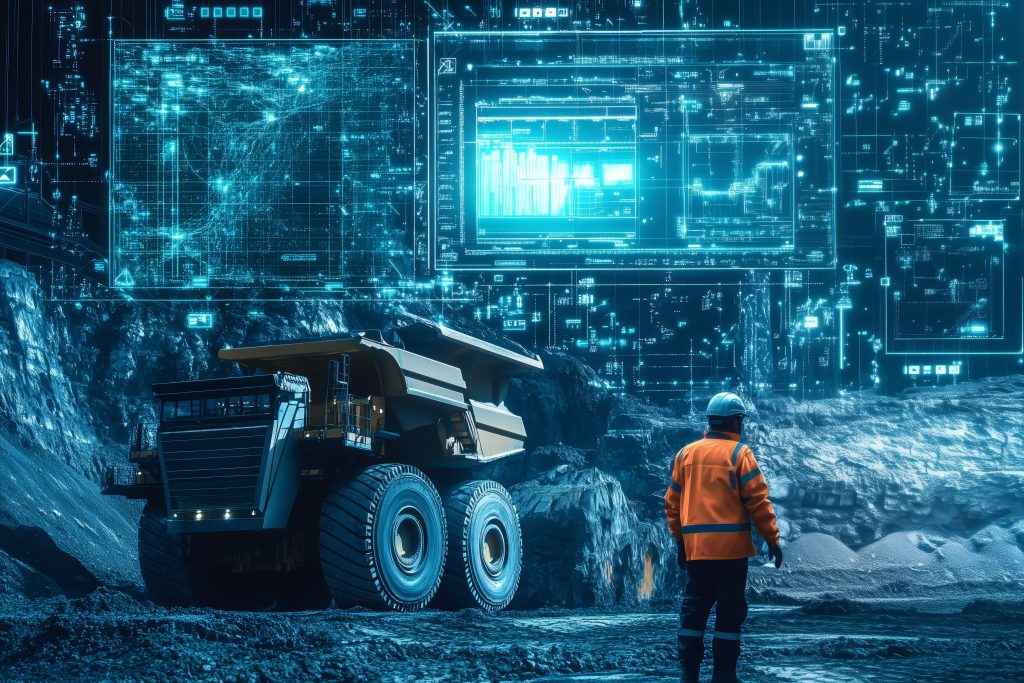
The mining industry, historically defined by manual labour and high-risk operations, is entering a new era — one powered by Artificial Intelligence (AI). Across Africa, from South Africa’s deep-level gold mines to Botswana’s diamond fields, AI is redefining how minerals are explored, extracted, and processed.
1. Smarter Exploration and Resource Discovery
AI advantage: Data-driven geological insights reduce uncertainty and exploration costs.
- Predictive Modelling analyses geological surveys, satellite imagery, and drilling data to pinpoint mineral-rich zones.
- 3D Geological Mapping improves drilling accuracy and reduces wasted exploration spend.
Case Study Spotlight
In West Africa, AI-based exploration platforms cut prospecting timelines by up to 20%, increasing discovery rates while saving millions in drilling costs.
Infographic idea?:
- Map of Africa with “AI Exploration Hotspots” showing Ghana, South Africa, and Botswana.
2. Autonomous and Remote Mining Operations
AI-enabled self-driving trucks, precision drills, and automated loaders are transforming productivity.
- Remote Operations Centres (ROCs) allow control from hundreds of kilometres away.
- Autonomous fleets improve fuel efficiency and reduce accident rates.
Case Study Spotlight?
Anglo American uses AI-powered autonomous trucks in South Africa, improving haulage productivity by 15% and cutting fuel consumption by 8%.
Infographic idea?:
- Diagram comparing manual vs. AI-powered haulage in fuel use, safety incidents, and output.
3. Predictive Maintenance and Equipment Longevity
Equipment breakdowns are costly — AI prevents them.
- Sensors monitor vibration, temperature, and load stress in real time.
- Predictive models forecast component failures before they happen.
Case Study Spotlight?
A gold mine in South Africa used AI-powered predictive maintenance to reduce unplanned downtime by 30%, saving over $1.5 million annually.
4. Worker Safety and Risk Management
AI is making mines safer with real-time hazard detection.
- Computer vision ensures workers wear PPE.
- Air quality sensors automatically adjust underground ventilation.
- Predictive analytics assess rockfall and tailings dam risks.
Pull Quote:
“AI is our extra set of eyes underground — always alert, always scanning.” — Mine Safety Officer, Rustenburg
5. Sustainable Mining and Environmental Responsibility
AI enables precision ore sorting, lowering energy and chemical use.
- Carbon footprint tracking for ESG compliance.
- Real-time environmental impact monitoring.
Case Study Spotlight
In Botswana, AI-driven diamond sorting increased recovery rates by 10% while reducing waste rock processing by 15%.
Infographic idea:
- Circular graphic showing “AI in the Green Mining Cycle” — from ore sorting to emissions tracking.
6. AI in Mineral Processing and Quality Control
AI-powered real-time ore grading improves recovery and lowers costs.
- Image recognition instantly identifies mineral quality.
- Processing systems adjust automatically for maximum efficiency.
The African Opportunity
Africa’s mineral-rich landscape gives it a unique advantage. AI can unlock greater efficiency, attract global investment, and support the continent’s green mining ambitions.
Conclusion
AI is no longer a buzzword — it’s the engine driving mining’s digital transformation. By adopting AI now, African mining companies can increase productivity, enhance safety, and secure a sustainable future in an increasingly competitive global market.